
TL;DR:
- AI-driven answer synthesis now captures over half of search traffic in 2026, reshaping SEO focus towards content structure and citations. Marketers must tailor content to answer specific questions clearly and match user phrasing to gain AI citations. Building brand authority across platforms and maintaining technical health remain essential for visibility in AI-enhanced search.
SEO trends in 2026 are defined by AI-powered answer synthesis, verifiable brand authority, and multi-platform content distribution. Traditional ranking lists no longer tell the full story. Traditional organic search still accounts for 53% of all trackable web traffic even as total search usage grows globally, combining AI and traditional engines. The shift is real, but organic search is not dead. What has changed is how search engines retrieve, synthesize, and surface content. Digital marketers, business owners, and SEO professionals who understand these mechanics will capture visibility. Those who ignore them will lose ground fast.
How do AI Overviews change SEO strategies in 2026?
AI Overviews are Google's synthesized answer blocks that appear above traditional blue links. AI Overviews retain 58% of clicks that traditionally went to top-ranking organic listings. That means more than half of the clicks your content used to earn now go to a machine-generated summary instead.

The implication is direct. Ranking on page one no longer guarantees traffic. Your content must be structured so that AI systems can extract it, cite it, and include it in their synthesized answers. This is a fundamentally different optimization target than a 10-blue-links results page.
Google's AI Mode takes this further. It uses a conversational interface that interprets multi-step queries and assembles answers from multiple sources simultaneously. A user asking "what hosting plan is best for a WordPress blog under $10 a month" gets a synthesized answer, not a list of links to scroll through.
To get cited in these AI-generated answers, your content must do three things:
- Answer one question per section. Generative AI retrieves modular content chunks, so each heading and paragraph must stand alone as a complete, unambiguous answer.
- Use direct, declarative language. Hedged or vague sentences get skipped by AI extractors. "The best option is X" outperforms "it depends on your situation."
- Match the exact phrasing of user queries. AI systems pattern-match question phrasing. Your H2 headings should mirror how real users ask questions.
Pro Tip: Structure every major section as if it were a standalone FAQ entry. Write the question as the heading, then answer it in the first sentence of the paragraph. This format is the single most reliable way to get pulled into AI Overviews.
What is Query Fan-Out, and why does it matter for keyword strategy?
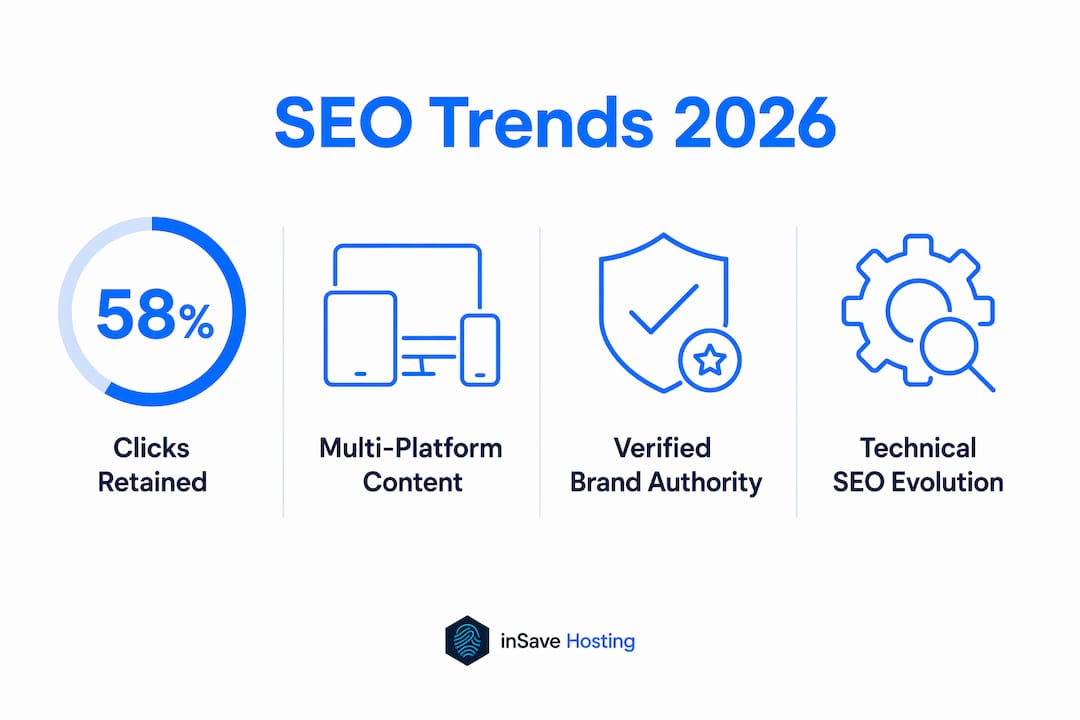
Query Fan-Out is the process by which AI search engines break a single user query into dozens of sub-queries, retrieve answers for each, and synthesize a unified response. Searches for "query fan-out" increased 2,550% year-over-year by june 2026, signaling that SEO professionals are rapidly learning this concept. That growth rate reflects how quickly the industry is shifting its keyword strategy away from single-phrase targeting.
The practical consequence is significant. A user asking "how do I start a WordPress blog" triggers sub-queries about domain registration, hosting selection, theme setup, plugin installation, and content planning. If your site answers only the top-level question, you compete for one slot. If your site answers all the sub-queries with dedicated, well-structured pages, you compete for multiple citation opportunities across the same search session.
Generative Engine Optimization vs. traditional SEO
Generative Engine Optimization, or GEO, is the practice of structuring and distributing content specifically to earn citations in AI-generated answers rather than to rank on a results page. Traditional SEO targets a URL position. GEO targets answer inclusion.
The table below shows how the two approaches differ in objective and execution:
| Dimension | Traditional SEO | Generative Engine Optimization (GEO) |
|---|---|---|
| Primary goal | Rank a URL on page one | Get cited in an AI-generated answer |
| Content format | Long-form, keyword-rich pages | Modular, atomic answer chunks |
| Success metric | Keyword ranking position | AI citation frequency |
| Link strategy | Backlinks to domain | Brand mentions and entity citations |
| Keyword focus | Single target phrase | Query Fan-Out sub-query coverage |
GEO is not a replacement for traditional SEO. Visibility is earned through retrieval and verified brand citations, not just page rank. The most effective 2026 SEO strategies run both in parallel.
Pro Tip: Before writing any new content, map the Query Fan-Out sub-queries your topic generates. Use Google's "People Also Ask" boxes and AI Mode follow-up questions as your sub-query research tool. Each sub-query is a separate content opportunity.
One caution: low-quality GEO advice is spreading fast. Some practitioners recommend flooding the web with AI-generated answer fragments to game citation systems. This approach produces spam, not authority. AI systems are increasingly trained to detect and discount thin, repetitive content. Build depth, not volume.
How is technical SEO evolving with llms.txt and structured data?
Technical SEO in 2026 extends well beyond site speed and crawlability. New policy files and metadata standards now govern how AI crawlers read and represent your brand. Automated SEO tools simplify technical tasks, but decisions around robots.txt and llms.txt remain critical strategic policy surfaces. Treating these files as afterthoughts is a serious mistake.
The key technical priorities for 2026 are:
- llms.txt files. These plain-text files sit in your root directory and communicate your brand identity, services, and review sentiment directly to AI crawlers. llms.txt and supplementary JSON and markdown files explicitly communicate brand identity to AI crawlers, increasing referrals from AI platforms. Subdirectory-specific llms.txt files let you customize messaging for different product or service areas.
- robots.txt as a policy document. Robots.txt no longer just blocks crawlers. It now signals which content you authorize AI systems to index, summarize, and cite. Review your directives with this in mind.
- FAQPage schema and structured data. HTTPS adoption exceeds 91%, and FAQPage schema adoption is rising as sites compete for AI extractability. FAQPage schema marks up your Q&A content so AI systems can pull it directly into answer blocks. Apply it to every page that answers a specific question.
- Page speed and Core Web Vitals. Fast load times remain a baseline ranking signal. AI search agents also factor in page reliability when selecting citation sources. A slow site loses on both fronts.
Understanding how hosting impacts SEO is the foundation of this technical layer. Your server response time, uptime record, and CDN configuration all feed directly into the signals that AI crawlers evaluate.
How do you build brand authority for AI citations in 2026?
Brand authority is the single most important long-term SEO asset in 2026. Single-platform SEO strategies are obsolete. AI systems build their understanding of your brand from signals across every platform where your name appears. A brand that exists only on its own website is invisible to AI citation engines.
SEO success requires unified strategies across YouTube, LinkedIn, and Instagram to boost entity authority and improve AI citations. The word "unified" matters here. Inconsistent messaging across platforms confuses AI entity resolution. Your brand name, description, and core claims must be identical everywhere.
Building E-E-A-T signals that AI systems trust
Google's E-E-A-T framework (Experience, Expertise, Authoritativeness, and Trustworthiness) now feeds directly into AI citation decisions. AI systems prefer sources with verifiable human credentials. Bylines with author bios, credentials, and linked professional profiles outperform anonymous content in citation frequency.
A practical multi-platform authority strategy for 2026 looks like this:
- Publish original research or data. AI systems cite primary sources. A survey, case study, or proprietary dataset gives other sites a reason to mention your brand, which builds citation chains.
- Maintain consistent NAP data for local SEO. Name, address, and phone number must match exactly across Google Business Profile, Yelp, and every directory listing. Local SEO success requires visible physical addresses, minimum review thresholds, and precise city boundary compliance for accelerated ranking improvements.
- Distribute content across YouTube, LinkedIn, and Instagram simultaneously. Repurpose each article into a short video, a LinkedIn post, and an Instagram carousel. Each platform mention adds a citation node that AI systems can resolve back to your brand entity.
- Earn editorial mentions, not just backlinks. A brand mention in a Search Engine Journal article carries more AI citation weight than a directory backlink. Pitch guest posts, expert quotes, and data contributions to authoritative publications.
- Respond to reviews publicly and consistently. Review sentiment is a direct input to AI brand evaluation. A pattern of professional, specific responses signals a trustworthy, active brand.
Pro Tip: Use enterprise AI indexing tools to audit how AI systems currently represent your brand. If the AI description of your business is inaccurate or thin, your llms.txt and structured data need immediate attention.
The role of SSL in SEO also feeds into brand trust signals. HTTPS is a baseline requirement. Sites without it lose trust signals in both traditional rankings and AI citation evaluation.
Key Takeaways
SEO strategies for 2026 succeed when they combine AI-optimized content structure, verified brand authority, and technical policy controls like llms.txt and structured data.
| Point | Details |
|---|---|
| AI Overviews reduce organic clicks | AI Overviews retain 58% of clicks from top organic listings, making citation optimization mandatory. |
| Query Fan-Out expands content opportunities | Map sub-queries for every topic to compete for multiple AI citation slots per search session. |
| llms.txt is a strategic asset | Use llms.txt and FAQPage schema to communicate brand identity directly to AI crawlers. |
| Multi-platform presence builds entity authority | Publish consistently on YouTube, LinkedIn, and Instagram to strengthen AI brand recognition. |
| Traditional SEO still drives traffic | Organic search accounts for 53% of trackable web traffic, so classic SEO fundamentals remain worth protecting. |
The uncomfortable truth about SEO's AI transition
The SEO industry is in a genuine identity crisis right now, and most advice you read online is either too optimistic or too panicked. I've watched marketers abandon years of solid content work to chase AI citation hacks, and I've watched others ignore the AI shift entirely and wonder why their traffic is falling.
The truth sits in the middle. The fundamentals still work. A well-structured page with real expertise behind it, fast load times, and consistent brand signals will outperform thin AI-generated content in citation quality every time. What has changed is the surface you optimize for, not the underlying principle that quality earns visibility.
The GEO spam problem is real and worth naming directly. I've seen agencies selling "AI citation packages" that amount to flooding the web with low-quality answer fragments. This is the 2026 version of link farms. It will produce short-term noise and long-term penalties. Do not buy it.
What actually works is treating your content like a reference document. Every section should be so clear and complete that an AI system has no reason to look elsewhere for the answer. That standard is harder to hit than keyword density targets, but it is the only one that compounds over time.
Invest in your technical foundation now. llms.txt, FAQPage schema, and a fast, reliable hosting setup are not optional extras. They are the infrastructure that determines whether AI systems can even find and trust your content. Get those right before worrying about content volume.
— Ihor
Your technical SEO foundation starts with the right hosting
Fast, reliable hosting is the infrastructure layer that every 2026 SEO strategy depends on. Without it, even perfectly structured content loses ground to slower, less reliable competitors.
inSave Hosting powers websites with LiteSpeed servers, free CDN integration, HTTP/2, and free SSL certificates included on every plan. These are the exact technical signals that AI crawlers and Google's Core Web Vitals evaluate when deciding which sources to trust and cite. inSave Hosting also offers one-click WordPress installation, free site migration, and 99.9% uptime. Explore shared hosting plans built for digital marketers and business owners who need a technical foundation that supports serious SEO work.
FAQ
What is the biggest SEO change in 2026?
AI Overviews now retain 58% of clicks that previously went to top organic listings. The biggest shift is optimizing for AI citation inclusion rather than URL ranking position alone.
What is Generative Engine Optimization (GEO)?
GEO is the practice of structuring content to earn citations in AI-generated answers rather than to rank on a traditional results page. It focuses on modular, self-contained answer chunks over long-form keyword-rich pages.
What is llms.txt and why does it matter for SEO?
llms.txt is a plain-text file in your website's root directory that communicates your brand identity, services, and review sentiment to AI crawlers. It increases the accuracy and frequency of AI platform referrals to your site.
Does traditional SEO still work in 2026?
Traditional organic search still accounts for 53% of all trackable web traffic in 2026. Classic SEO fundamentals like structured content, backlinks, and technical health remain effective alongside newer AI-focused strategies.
How does page speed affect AI citations?
AI search agents factor in page reliability and load speed when selecting citation sources. A slow or unreliable site loses citation opportunities even when its content quality is high.