TL;DR:
- Content creators face increasing cybersecurity threats like deepfakes, targeted phishing, and social engineering attacks in 2026. Protecting revenue streams and diversifying platforms are essential, with strong security habits and offline backups vital for disaster recovery. Using hardware security keys, regular audits, and an incident response plan enhances long-term account safety and business continuity.
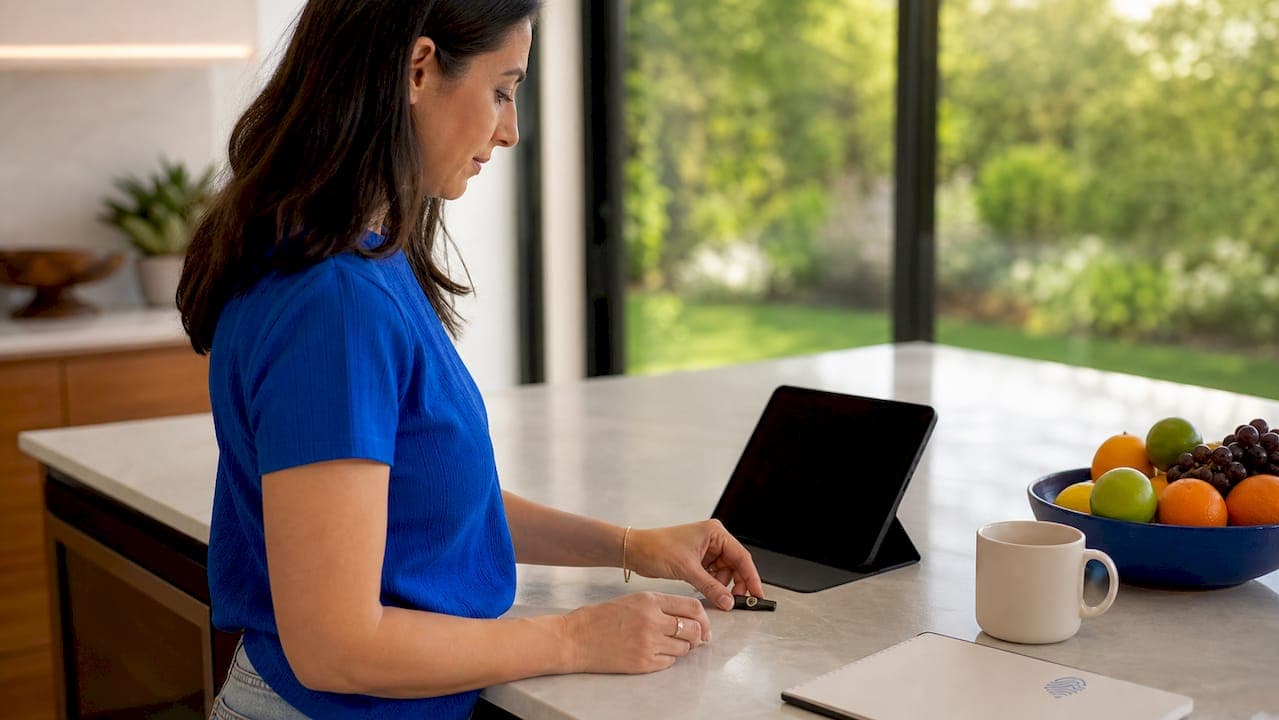
Security for content creators is defined as the active protection of digital accounts, original content, and audience data against hacking, impersonation, theft, and fraud. Your accounts are not just social profiles. They are revenue-generating business assets, and attackers know it. Tools like YubiKey hardware keys, NordPass password management, and Bitdefender security services exist precisely because the creator economy has become one of the most targeted sectors online. This guide explains the specific threats you face in 2026, why your business depends on getting this right, and the exact steps to protect everything you have built.
What are the main security risks for content creators in 2026?
The threat landscape targeting creators has shifted from opportunistic hacking to precision attacks. AI-powered deepfakes and phishing now target creators specifically, with new deceptive content generated every few minutes. This is not a background risk. It is an active, automated assault on your identity and income.
The three dominant threats in 2026 are:
- AI-powered deepfakes. Attackers clone your voice and face to run fake giveaways, fraudulent sponsorship deals, and scam livestreams. Over 9,000 malicious YouTube livestream scams were recorded in 2024 alone, and by 2026 those tactics evolved into deepfake podcasts and fake brand collaborations. Instagram alone hosts over 64 million influencers, creating an enormous attack surface for these schemes.
- Hyper-personalized phishing. Attackers no longer send generic emails. They study your recent uploads, brand partnerships, and posting schedule to craft messages that feel legitimate. Phishing kits specifically target mid-tier creators with 10,000 to 500,000 subscribers, deliberately avoiding accounts above 3 million to stay under platform radar.
- Social engineering. Social engineering is the most common attack vector against creators because it exploits human psychology, not software vulnerabilities. A fake copyright strike notice, an urgent "verify your account" message, or a too-good-to-be-true sponsorship inquiry are all designed to make you act before you think.
Pro Tip: If any message creates urgency around your account, your monetization, or a brand deal, stop. That urgency is the attack. Verify through official channels before clicking anything.
Why does account security directly affect your business?
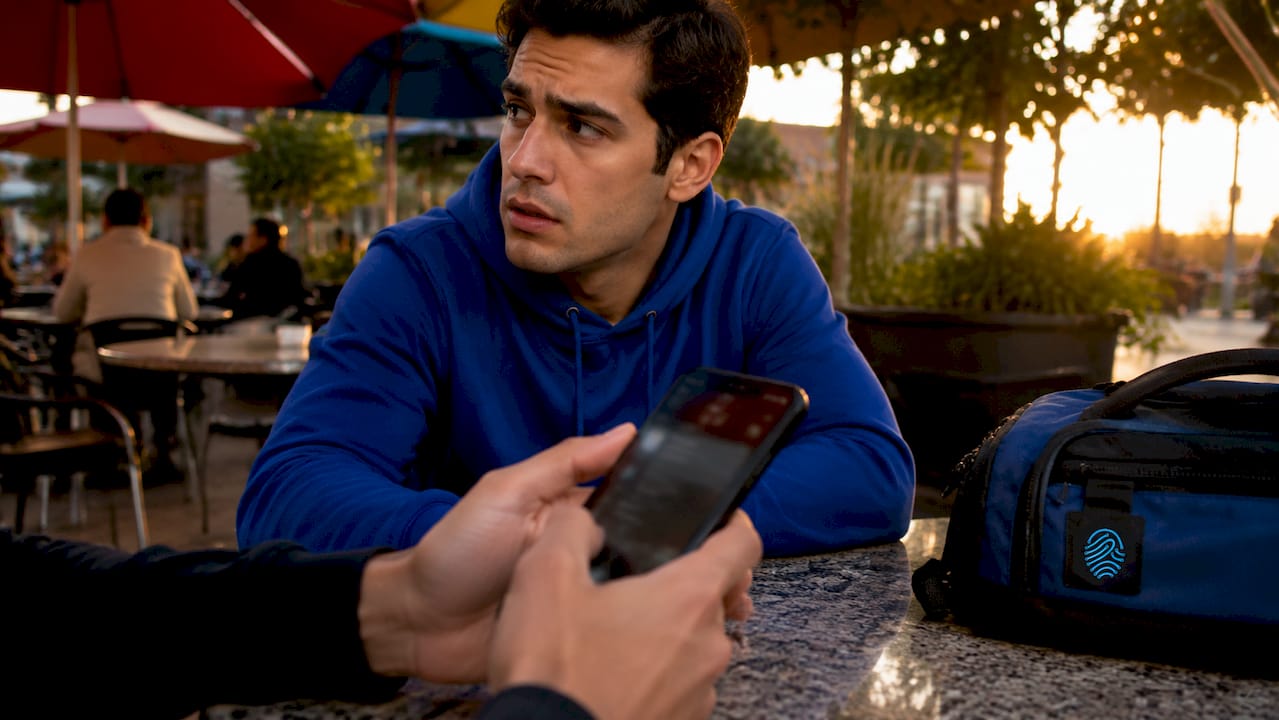
Creator accounts are high-value targets because they provide direct access to monetizable communities. A compromised YouTube or Instagram account does not just cost you login credentials. It costs you advertiser trust, sponsorship contracts, and the audience relationship you spent years building. A single breach can cascade into fraud charges against your followers, permanent platform bans, and brand deals that evaporate overnight.
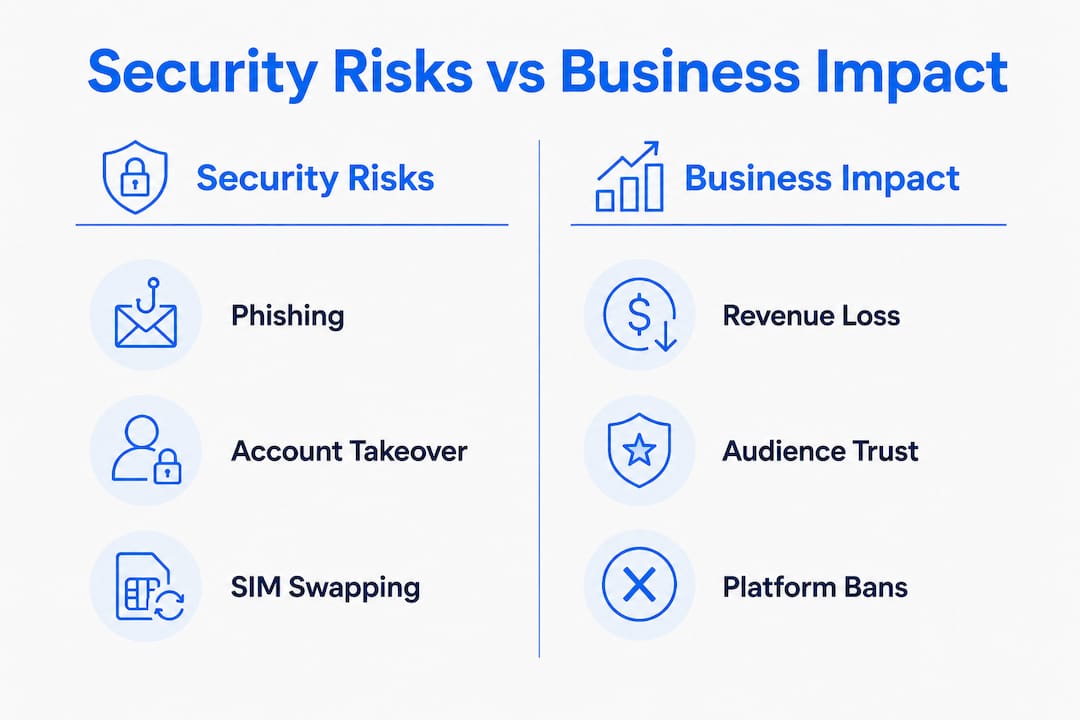
The revenue risk is real and specific. Consider this breakdown:
| Revenue Stream | Primary Risk | Consequence of Breach |
|---|---|---|
| Ad revenue (YouTube, TikTok) | Account takeover | Demonetization or permanent ban |
| Brand sponsorships | Reputation damage | Contract cancellation, legal liability |
| Merchandise and direct sales | Payment fraud | Chargebacks, store suspension |
| Newsletter and email list | Data theft | Loss of owned audience, GDPR exposure |
| Paid communities (Patreon, Substack) | Subscriber data leak | Member churn, platform removal |
The pattern is clear. Every revenue stream carries a distinct security risk, and none of them recover quickly after a breach.
Creators with diversified revenue survive platform shocks 5x better than those dependent on a single platform. The practical rule is a "3-platform minimum," meaning you maintain an active presence and audience relationship on at least three separate platforms simultaneously. Pair that with owning at least 40% of your revenue through channels you control directly, such as an email list, a personal website, or a paid community. Platform bans and algorithm changes cannot touch what you own outright.
Pro Tip: Your email list is your most secure audience asset. No platform can ban you from your own subscriber list. Build it consistently, back it up monthly, and treat it as your primary business continuity tool.
What are the best security practices for online creators?
Strong security does not require a technical background. It requires consistent habits applied across every account and device you use for your business. Here is a prioritized sequence to follow:
-
Use a dedicated password manager. NordPass, 1Password, and Bitwarden each generate and store unique, complex passwords for every account. Reusing passwords across platforms is the single fastest way to lose multiple accounts in one breach. A password manager eliminates that risk entirely.
-
Upgrade beyond SMS two-factor authentication. Text message codes are intercepted through SIM-swapping attacks. Traditional SMS 2FA is increasingly ineffective against modern attacks. Switch to an authenticator app like Google Authenticator or Authy as a minimum step.
-
Adopt a hardware security key. FIDO2-compliant keys like YubiKey cost approximately $50 and provide cryptographic session binding. Device Bound Session Credentials (DBSC) paired with a hardware key tie your active login session to a physical device, making remote session hijacking nearly impossible. This is the highest-value single security upgrade available to creators in 2026.
-
Deploy a Web Application Firewall (WAF). A WAF filters bot traffic and automated attacks before they reach your website or content platform. Hosting providers that include WAF protection, like those offering cloud security best practices, give you a layer of defense that operates without any manual effort on your part.
-
Build the pause-and-think habit. A 30-second pause habit significantly reduces the success rate of social engineering attacks. Before responding to any urgent message about your account, copyright, or a brand deal, take 30 seconds to verify the sender through an official channel. This single behavioral change stops the majority of phishing attempts cold.
-
Audit your account security settings quarterly. Review connected apps, active sessions, and recovery email addresses on every platform you use. Remove any third-party app you no longer recognize or actively use.
-
Maintain offline backups of critical content and data. Store your video files, scripts, audience lists, and business documents on an external hard drive or encrypted cloud storage that is not connected to your primary accounts. If your accounts are locked, your content and contacts survive.
How can creators prepare for and recover from security incidents?
Preparation is what separates a recoverable incident from a business-ending one. Most creators treat security as reactive. The ones who survive breaches treat it as a scheduled operational task.
Build your incident response routine around these steps:
- Run quarterly security audits. Quarterly audits and SOP reviews improve incident recovery speed and reduce downtime. Set a calendar reminder every three months to rotate passwords, review active sessions, test account recovery flows, and verify that your backup email and phone number are current.
- Test your recovery channels before you need them. Most creators discover their recovery email is outdated only after they are locked out. Verify every recovery option on YouTube, Instagram, TikTok, and your email provider at least twice a year.
- Maintain an offline audience backup. Export your email subscriber list, your Patreon member list, and any direct customer data monthly. Store it encrypted and offline. This is your business continuity plan if a platform bans or suspends your account without warning.
- Document every security incident. After any phishing attempt, suspicious login, or account anomaly, write down what happened, what you clicked, and what you did to respond. This log becomes your defense improvement record and helps you spot patterns in how attackers are targeting you specifically.
- Have a public communication plan ready. If your account is compromised and used to scam your audience, you need to communicate quickly and clearly. Draft a template message in advance so you are not writing under pressure while also trying to recover your account.
The types of website backups you maintain directly determine how fast you recover. Full backups, incremental backups, and offsite copies each serve a different recovery scenario. Know which type you have and how to restore from it before an incident forces you to find out.
Key takeaways
Creator security is a business-critical discipline that protects income, audience trust, and long-term viability across every platform you use.
| Point | Details |
|---|---|
| Hardware keys are the top upgrade | FIDO2 keys like YubiKey stop session hijacking that SMS codes cannot prevent. |
| Mid-tier creators are prime targets | Phishing kits specifically target accounts with 10,000 to 500,000 subscribers. |
| Diversify revenue and platforms | Creators with multiple income streams survive platform disruptions 5x better. |
| Quarterly audits are non-negotiable | Scheduled security reviews reduce recovery time and catch vulnerabilities before attackers do. |
| Own your audience data | An offline email list is the one asset no platform ban or account breach can take from you. |
The security mindset shift creators actually need
I have watched creators spend thousands on branding and equipment while leaving their accounts protected by a single reused password and an SMS code. That gap is not ignorance. It is a prioritization problem, and attackers count on it.
What I have seen work is treating security like content production. You do not film one video and call it done. You show up consistently, you improve your process, and you adapt when the platform changes the rules. Security works the same way. The creators who get hit hardest are the ones who set up two-factor authentication once in 2022 and never revisited it.
The deepfake threat is the one that concerns me most right now. Your voice and face are now raw material for fraud, and AI influencer platforms are accelerating how realistic synthetic content becomes. That is not a reason to panic. It is a reason to establish a clear public record of your communication channels so your audience knows where to verify anything that claims to come from you.
The pause-and-think habit is underrated. Thirty seconds of skepticism before clicking a link has stopped more breaches than any software tool I can name. Technology protects your accounts. Mindset protects your judgment. You need both.
— Ihor
Protect your content with inSave hosting's security features
Content creator security starts at the infrastructure level. If your website or portfolio runs on a host without SSL certificates, automated backups, or WAF protection, you are leaving the foundation exposed.
inSave Hosting provides secure shared hosting plans built with LiteSpeed technology, free SSL certificates, and daily automated backups designed for creators who need reliable protection without managing it manually. Every plan includes free CDN integration and managed security features that run in the background while you focus on creating. For creators running WordPress sites, inSave Hosting's WordPress hosting adds staging tools and one-click security updates. Your content deserves infrastructure that protects it. Explore inSave Hosting's plans and lock down your digital foundation today.
FAQ
What is the biggest security risk for content creators?
Social engineering is the most common attack vector, exploiting human psychology through urgency and impersonation rather than technical exploits. Phishing kits specifically target mid-tier creators with 10,000 to 500,000 subscribers using hyper-personalized messages.
Do hardware security keys actually prevent account takeovers?
Yes. FIDO2-compliant keys like YubiKey use Device Bound Session Credentials to cryptographically tie login sessions to a physical device, making remote session hijacking nearly impossible even if your password is stolen.
How often should creators run security audits?
Quarterly audits are the recommended standard. Each audit should include password rotation, review of active sessions and connected apps, testing of account recovery channels, and verification of offline backup integrity.
Why is SMS two-factor authentication no longer enough?
SMS codes are vulnerable to SIM-swapping attacks, where an attacker convinces your carrier to transfer your phone number to their device. Authenticator apps and hardware keys provide cryptographic protection that SMS cannot match.
How does platform diversification protect creator security?
Creators who maintain a presence on at least three platforms and own 40% or more of their revenue through direct channels survive platform bans and account compromises 5x better than those dependent on a single account or platform.